Key Takeaways
The idea of applying for a doctorate can feel more intimidating than the actual process turns out to be. Stripped of the uncertainty, it's a fairly linear sequence of steps — each with a clear purpose, timeline, and set of documents. Here's what it actually looks like, start to finish.
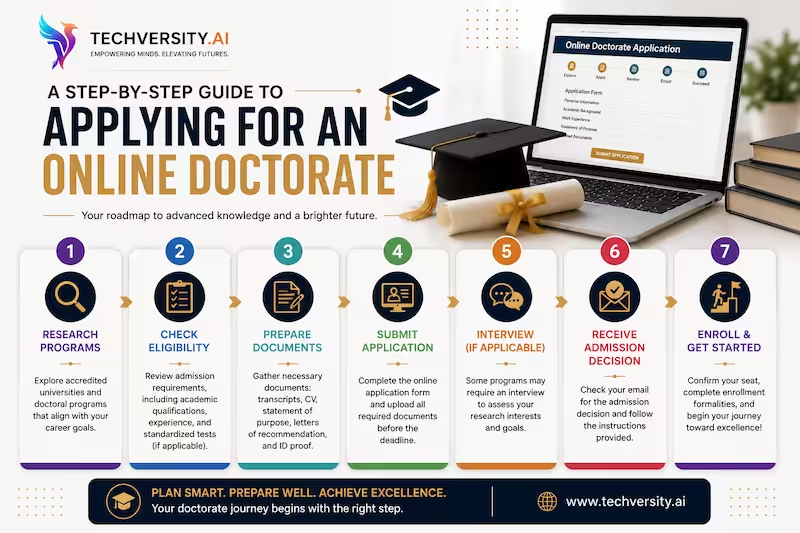
Step 1: Initial Enquiry & Eligibility Check
This is the lowest-commitment step in the entire process, and the one most candidates underestimate. You submit basic professional and academic background information, and an advisor reviews it against general eligibility criteria — years of experience, prior qualifications, and general fit for a doctoral-level pathway — before anything formal begins.
Step 2: Pathway & University Matching
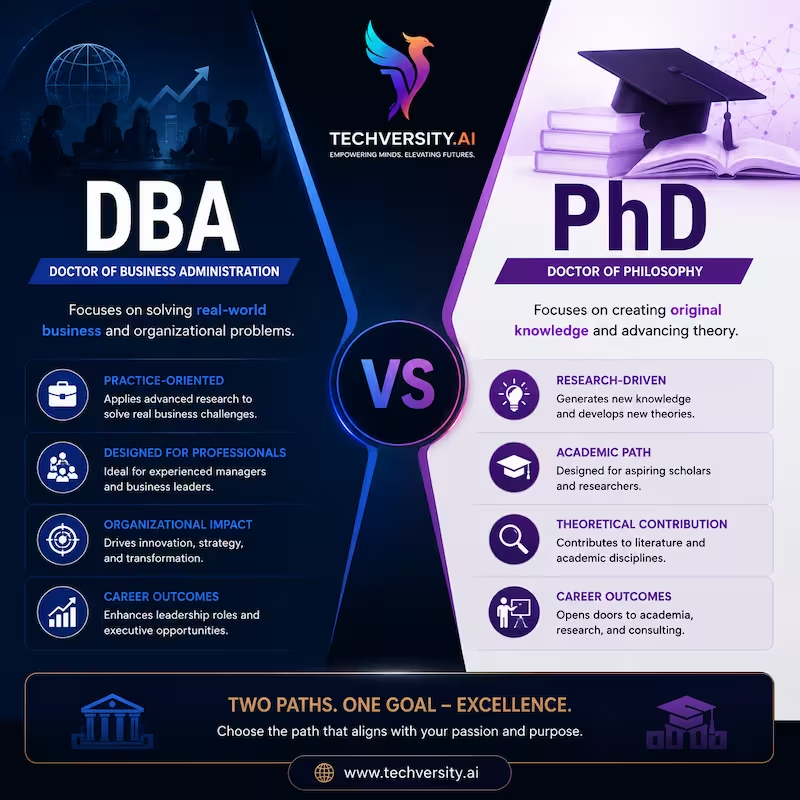
This is where most of the real decision-making happens, even though it doesn't always feel that way. Based on your background and goals, you're matched to the doctoral pathway — DBA, PhD, or another route — and the specific partner institution whose research focus, delivery format, and standing best fit what you're trying to achieve.
Step 3: Document Preparation
Most institutions request a consistent set of documents at this stage, though exact requirements vary slightly by university.
- An updated CV or professional resume, with clear detail on relevant experience.
- Academic transcripts or qualification certificates from prior study.
- A statement of purpose or initial research interest — this doesn't need to be a full proposal yet.
- Government-issued identification for verification purposes.
- Any additional documentation specific to your chosen pathway or institution.
Step 4: Formal Application Submission
With documents prepared, the formal application goes to the chosen institution. Some institutions include a short interview or assessment at this stage, particularly for research-intensive pathways like a PhD, to confirm fit between your intended research area and available supervision.
Step 5: Offer & Supervisor Assignment
Once the institution reviews your application, you receive a formal offer decision. For research-based pathways, this typically comes with assignment to a specific academic supervisor, who will guide your research design and progress from this point forward.
Step 6: Enrollment Confirmation & Programme Start
The final step is formal enrollment — confirming your place, completing any outstanding administrative requirements, and receiving your programme start details, including how coursework, supervision meetings, and milestones will be scheduled around your existing career.
“The paperwork is rarely the hard part. The hard part is deciding what you actually want to research — the process itself is mostly a matter of sequence and documentation.”
A Quick Reference Timeline
| Step | What Happens | Typical Duration |
|---|---|---|
| Eligibility check | Background reviewed against general criteria | A few days |
| Pathway & university matching | Matched to doctoral route and institution | About a week |
| Document preparation | CV, transcripts, statement of purpose assembled | 1–2 weeks |
| Formal application | Submitted to chosen institution, possible interview | 1–2 weeks |
| Offer & supervisor assignment | Formal decision and supervisor matching | 1–3 weeks |
| Enrollment confirmation | Final administrative steps and programme start | About a week |
Our Take
The process is more procedural than people expect, and most of the genuine decision-making happens earlier than the paperwork suggests — in choosing the right pathway and institution, not in filling out the final form. Treat the early conversations as the important part, and the rest tends to move quickly.
Next Step
Not sure which pathway fits your background?
A short advisory call is usually faster than reading every comparison guide — tell us where you are, and we'll tell you honestly what fits.
Talk to an Advisor